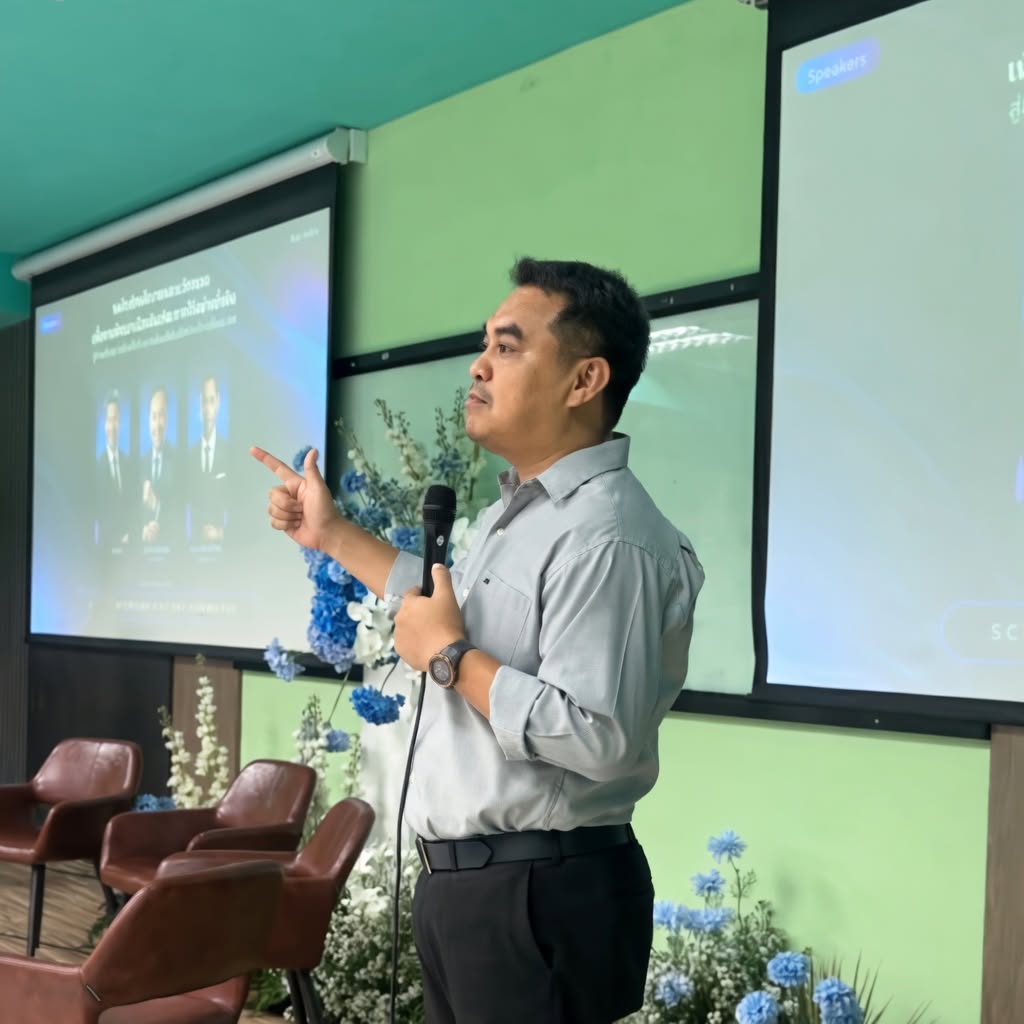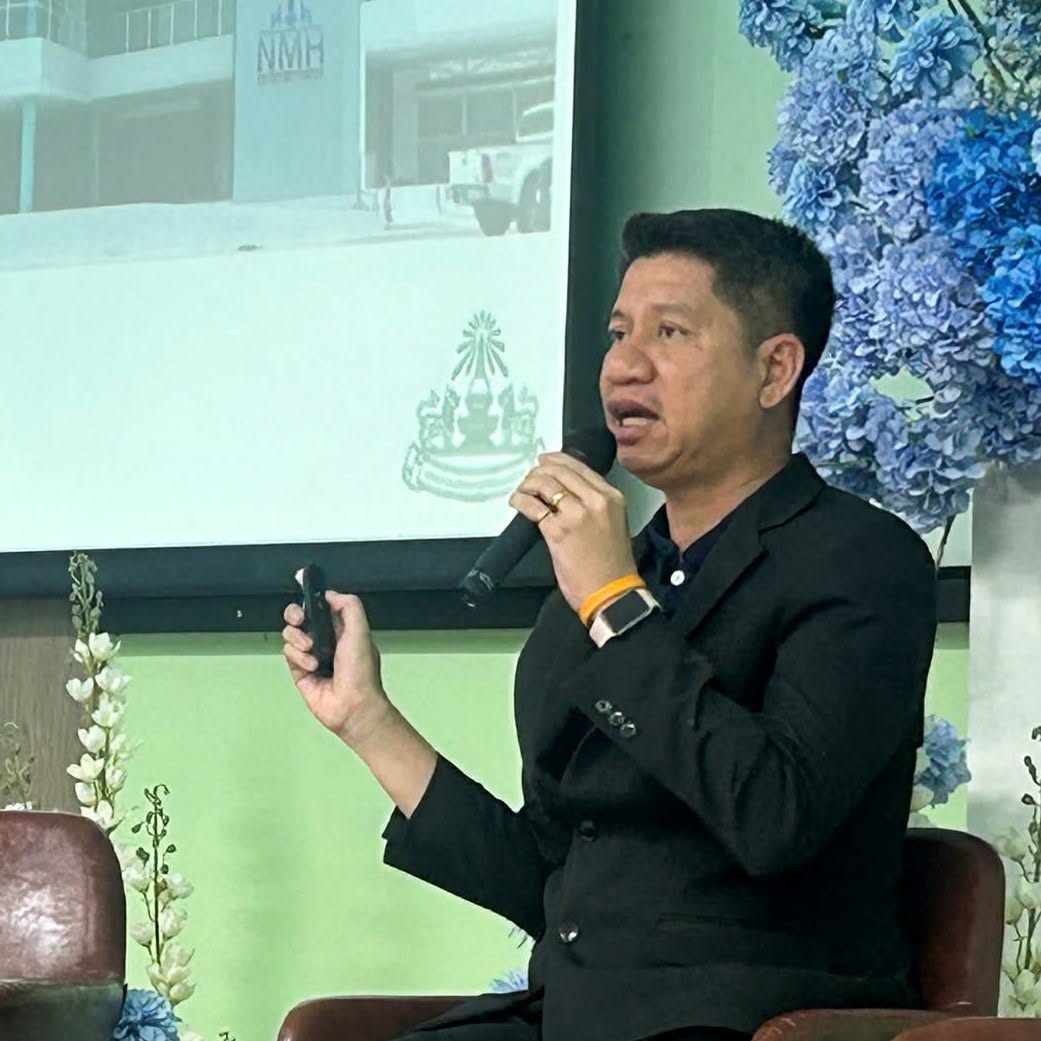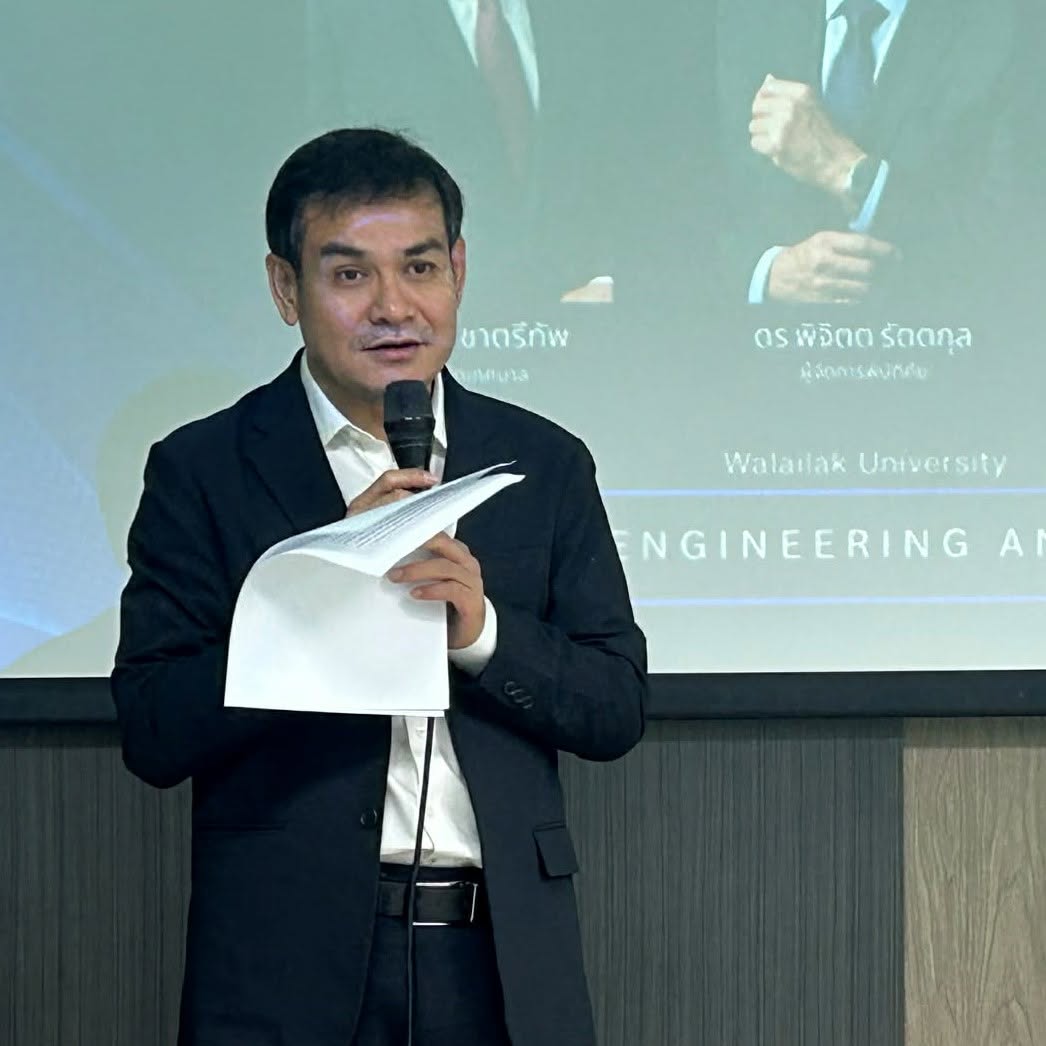
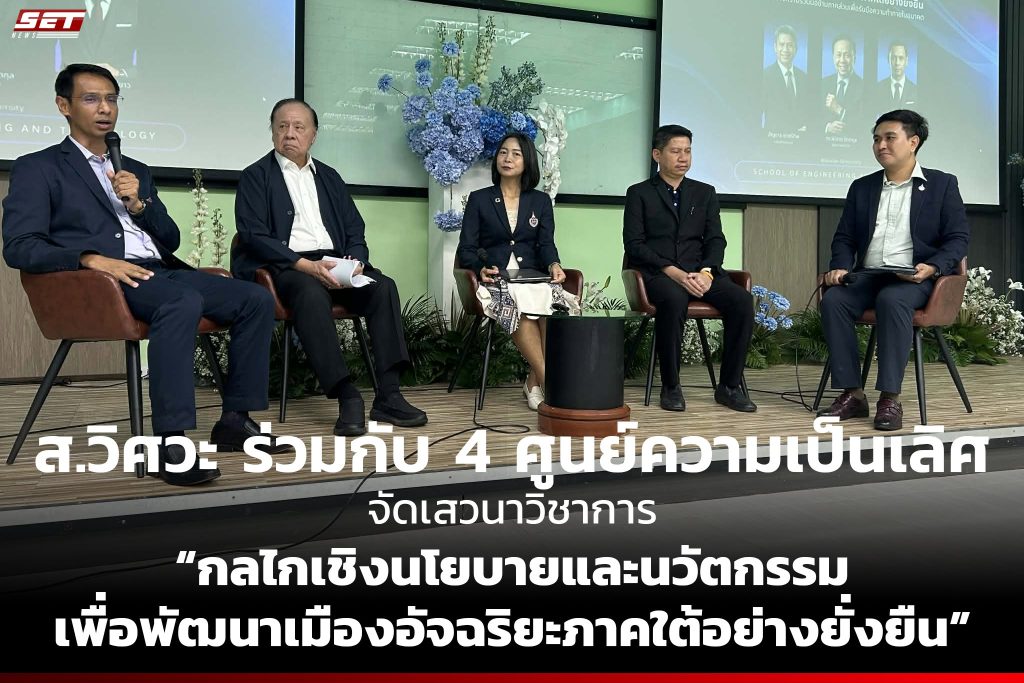
On 27 March 2026, from 9:30 a.m. to 4:30 p.m., the School of Engineering and Technology, Walailak University, in collaboration with four Centers of Excellence at Walailak University, organized an academic forum entitled “Policy Mechanisms and Innovation for Sustainable Smart City Development in Southern Thailand: Building Cross-Sector Collaboration to Address Future Challenges.”
The forum served as a platform for exchanging knowledge, perspectives, and experiences while strengthening collaboration among academia, government agencies, the private sector, and civil society. The goal was to jointly advance smart city development in Southern Thailand and enhance the region’s ability to respond sustainably to future changes and emerging challenges.
The event was divided into two main sessions. The morning session focused on identifying key issues and reflecting on “Future Crises and Challenges” from the perspectives of experts representing various sectors. Following the opening ceremony from 9:30–10:00 a.m., the Invited Speakers session was held from 10:00–11:20 a.m., bringing together representatives from four key areas: Smart Engineering, representing civil society networks; Smart Factory, focusing on innovative approaches to urban management and development; Smart City, represented by researchers; and Smart Materials, represented by government agencies and research funding organizations.
From 11:20 a.m. to 12:00 noon, the SET Talks session provided an opportunity for experts from each field to share their knowledge, professional experience, and in-depth perspectives. Speakers included Dr. Pijit in Smart Engineering, Ajarn Narongsak in Smart Factory, Mr. Sanchai in Smart City, and a representative from the Program Management Unit on Area-Based Development (PMU A) in Smart Materials. The discussion highlighted approaches to integrating engineering, technology, management, and public policy in a systematic manner to support sustainable urban development.
The afternoon session, held from 1:00–4:30 p.m., focused on “Research-Based Solutions” presented by research centers within Walailak University. The session demonstrated how engineering, science, and technology can be applied to address major societal and industrial challenges.
The Disaster Research Center presented “When Nature Pushes Back: Disaster Preparedness and Resilience in the Age of Climate Extremes,” highlighting preparedness and resilience in response to increasingly severe climate-related disasters.
The Palm Research Center presented “Biomass Technology for Sustainable Industrial Development,” focusing on the application of biomass technologies to promote sustainable industrial development. The AIoT Center presented “Intelligent Technology for Carbon Neutrality and Sustainability,” showcasing intelligent technologies that can support carbon neutrality and sustainability goals. Meanwhile, the Wood Research Center presented “Green Engineering and Smart Materials for Future Industries,” emphasizing green engineering and smart materials for the industries of the future.
This academic forum marked another important step for the School of Engineering and Technology and Walailak University in strengthening their roles in research, innovation, and academic services that contribute directly to regional development. In particular, the advancement of Smart City initiatives in the context of Southern Thailand requires the integration of knowledge, technology, policy, and collaboration from multiple sectors.
Beyond serving as a platform for academic exchange, the forum also provided an important foundation for building collaborative networks to address future challenges related to disasters, the environment, energy, industry, and the transition toward a low-carbon society. Such cooperation is expected to contribute to the development of Southern Thailand into a more resilient, innovative, and sustainable region in the future.