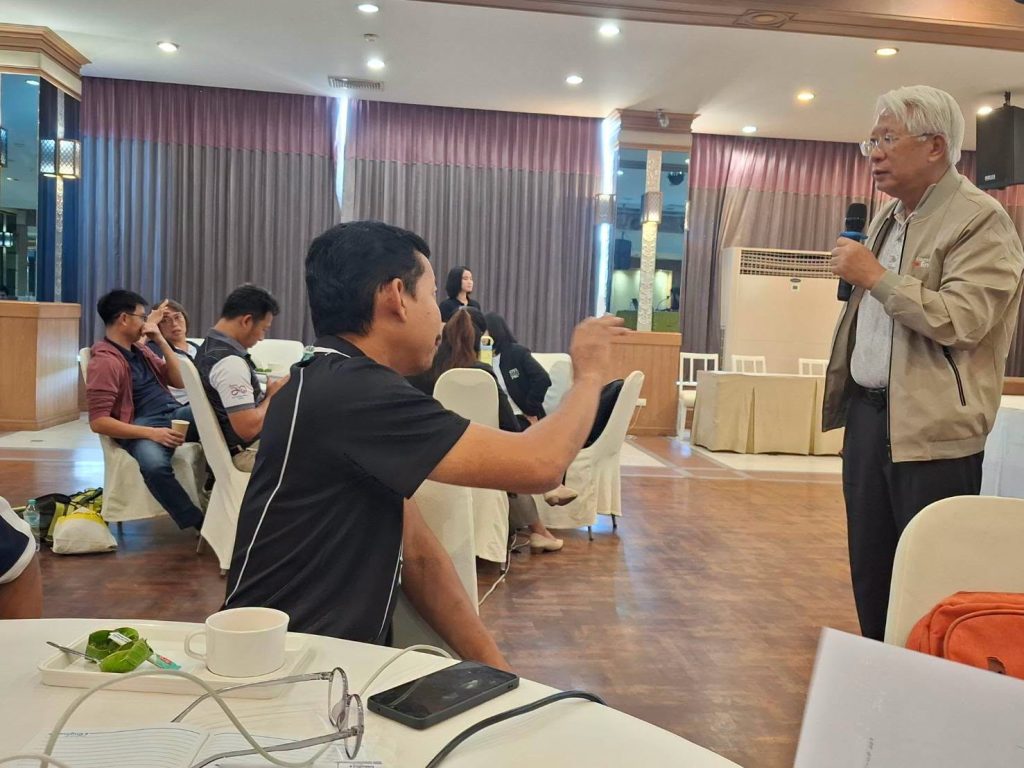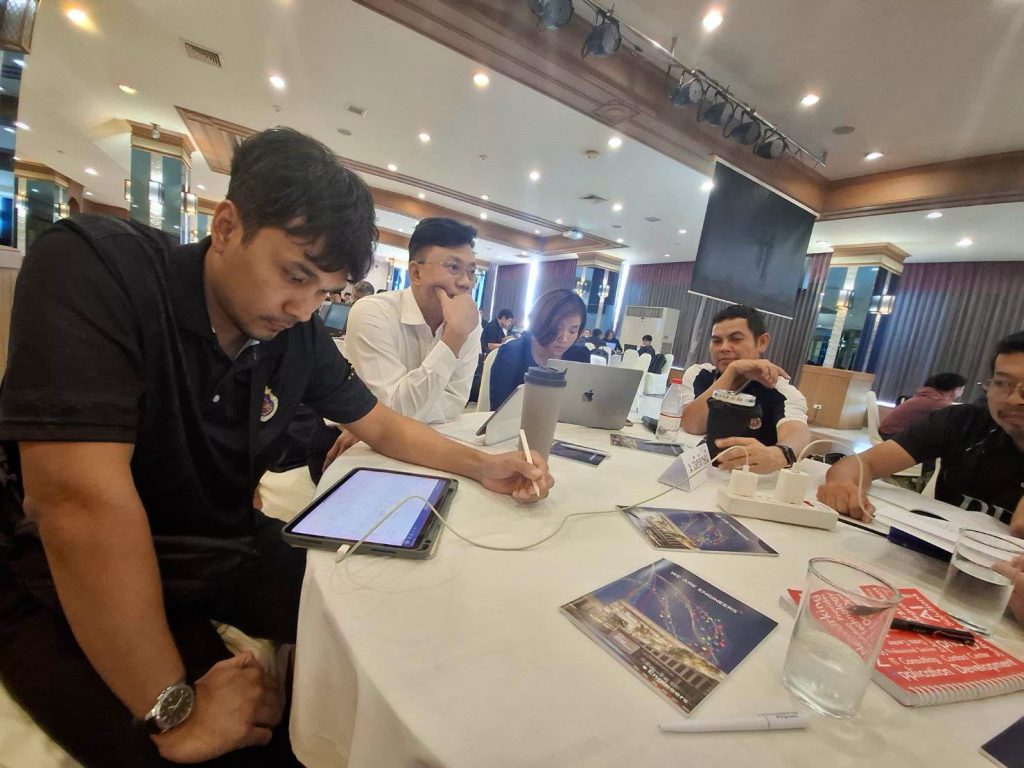
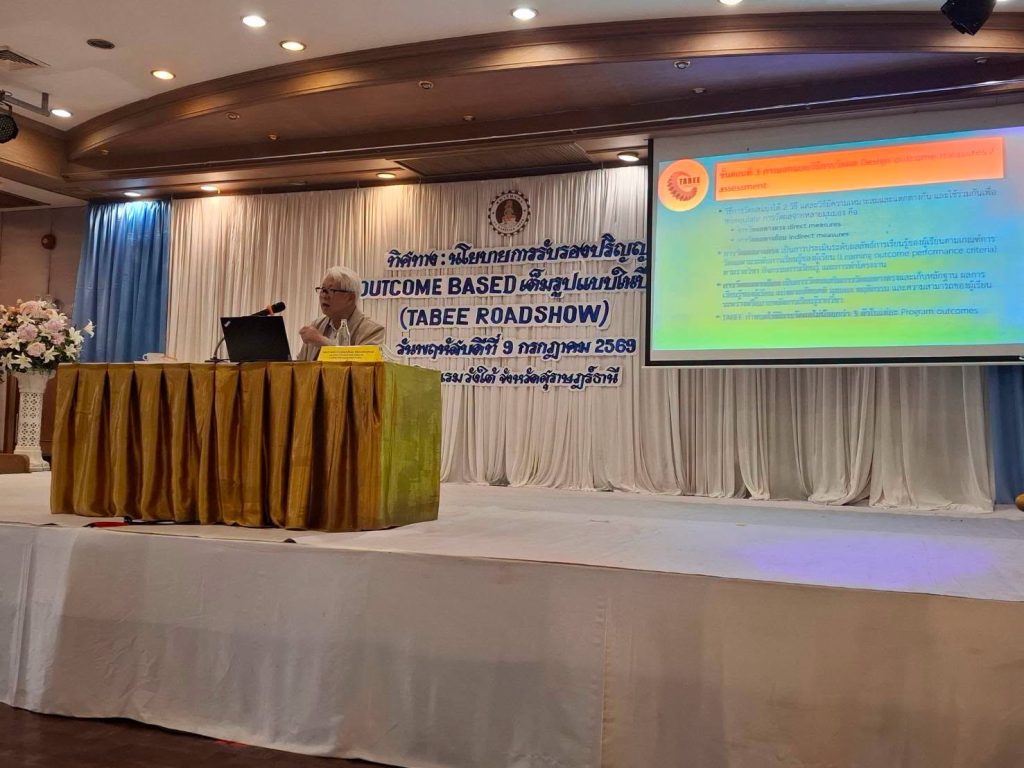
On July 9, 2026, the Dean and Heads of Engineering Programs from the School of Engineering and Technology, Walailak University, participated in the TABEE Roadshow, organized as part of the “Council of Engineers Thailand Roadshow for Southern Educational Institutions” in Surat Thani Province. The participation aimed to gain a better understanding of current policies and future directions regarding the accreditation of engineering degrees and to prepare the School’s academic programs for upcoming professional accreditation requirements.
The event was held under the theme “Policy Directions for Engineering Degree Accreditation toward Full Outcome-Based Implementation by 2031.” This topic is highly significant for engineering education, as Outcome-Based Education places emphasis on the knowledge, skills, attributes, and professional competencies that students are expected to demonstrate upon graduation, rather than focusing solely on course content or the number of instructional hours.
Participation in the event provided the Dean and Heads of Programs with an opportunity to learn about the policy directions of the Council of Engineers Thailand, as well as relevant criteria, guidelines, and requirements for the accreditation of engineering degrees. The information obtained from the event will serve as an important foundation for planning the development and revision of academic programs to ensure that they remain modern, comply with professional standards, and respond effectively to the continually changing needs of industry and the labor market.
The event also featured exchanges of knowledge and experiences concerning the formulation of program learning outcomes, the design of teaching and learning processes, the assessment of student learning outcomes, the collection of supporting evidence, and the use of assessment results for continuous program improvement.
These approaches enable educational institutions to clearly demonstrate that their graduates possess the knowledge, abilities, and competencies specified by their respective programs and are adequately prepared to enter the engineering profession.
Outcome-Based Education also encourages instructors to design learning activities that emphasize practical experience, systematic problem-solving, analytical thinking, teamwork, professional communication, ethical awareness, and social responsibility. These competencies are essential for engineers in the 21st century, who must be prepared to work in increasingly complex professional environments and adapt to rapid technological and industrial changes.
The School’s participation in the TABEE Roadshow therefore represented an important opportunity to build a shared understanding among administrators and academic program leaders. It also supported preparations for future adjustments to program administration, teaching and learning practices, assessment systems, and educational quality assurance processes in line with the transition toward full outcome-based accreditation in 2031.
The School of Engineering and Technology, Walailak University, continuously places importance on improving the quality of engineering education. It is committed to developing academic programs that meet both academic and professional standards while providing students with meaningful learning experiences connected to real-world engineering practice.
The School also aims to equip students with the ability to apply engineering knowledge to solve practical problems, work effectively with others, communicate professionally, and adapt to developments in technology and industry.
Participation in this event reflects the School’s strong commitment to developing engineering programs that comply with national and international accreditation standards. The ultimate goal is to produce engineering graduates who possess strong knowledge, professional competence, ethical values, social responsibility, and readiness to practice their profession.
Through continuous program development and quality enhancement, the School of Engineering and Technology seeks to prepare graduates to become an important driving force in the advancement of society, the economy, industry, and the nation in the future.