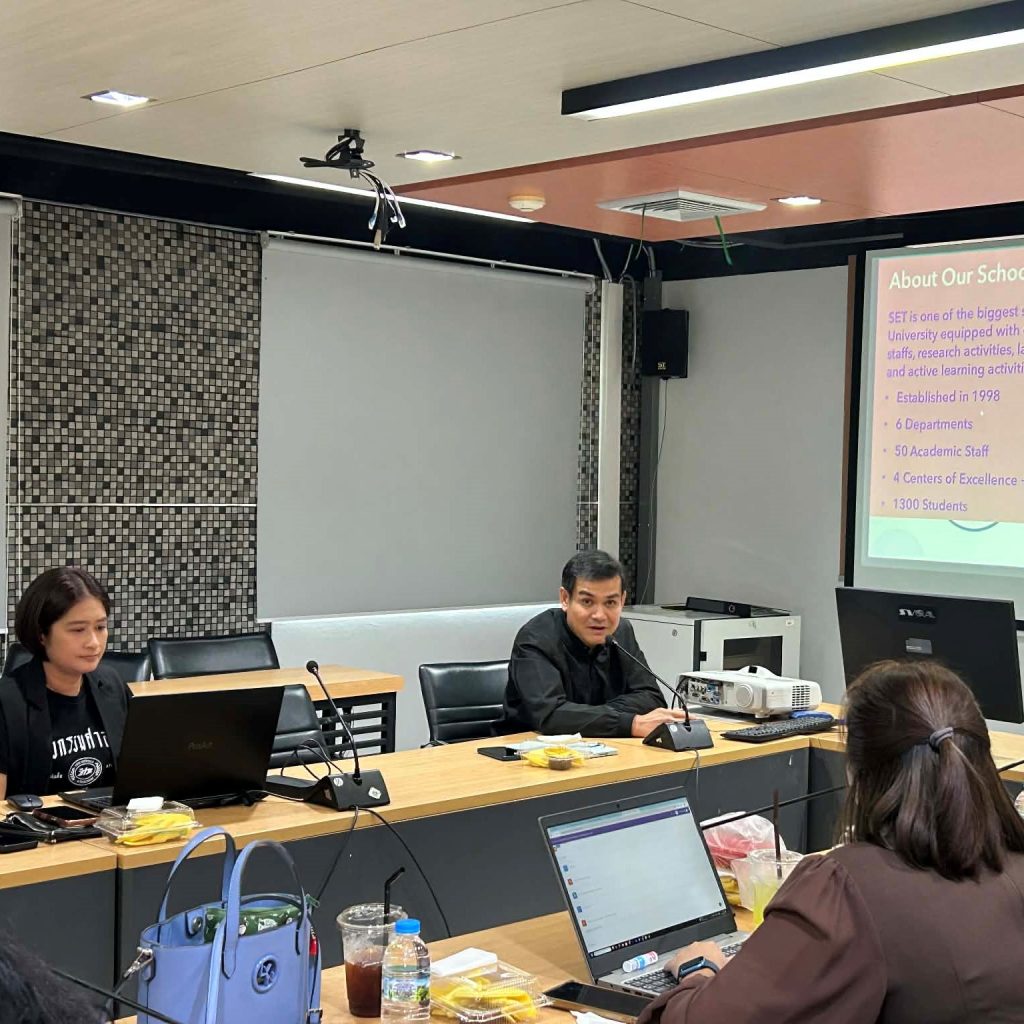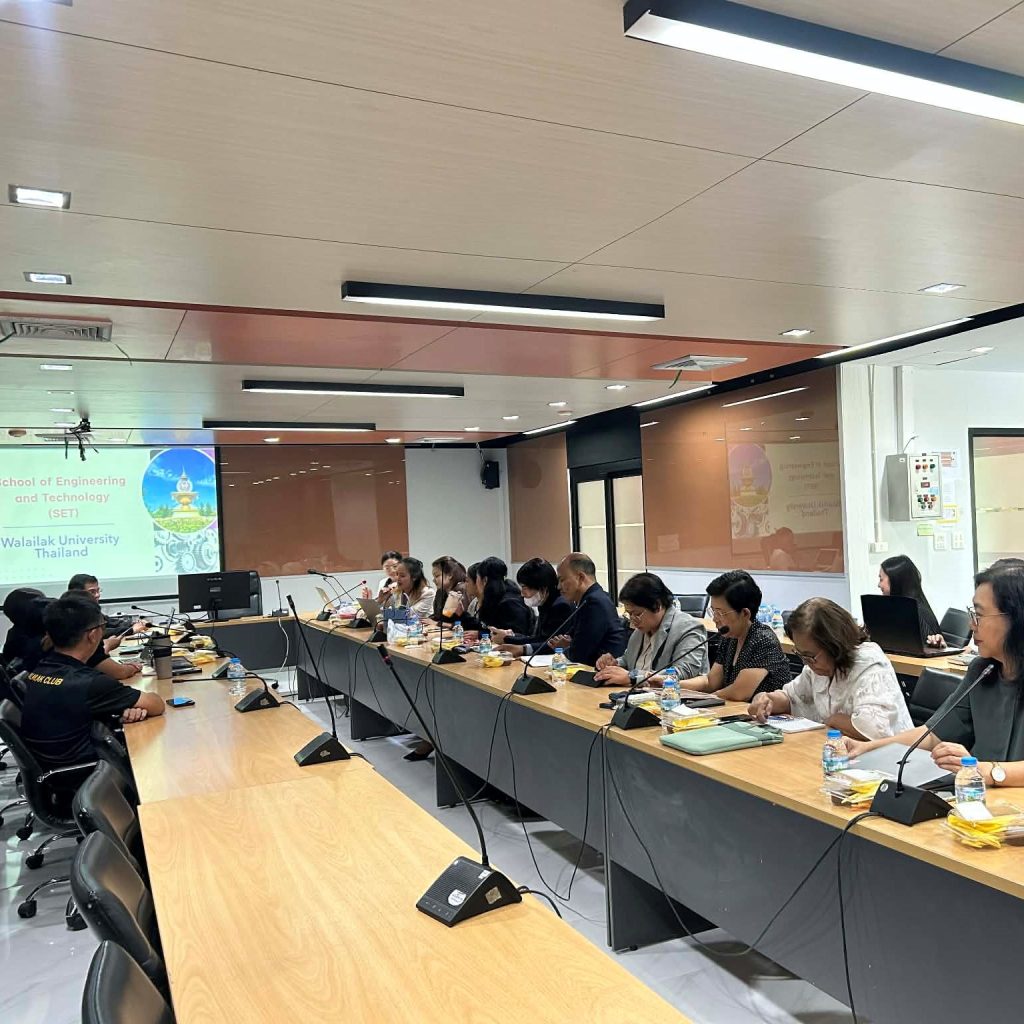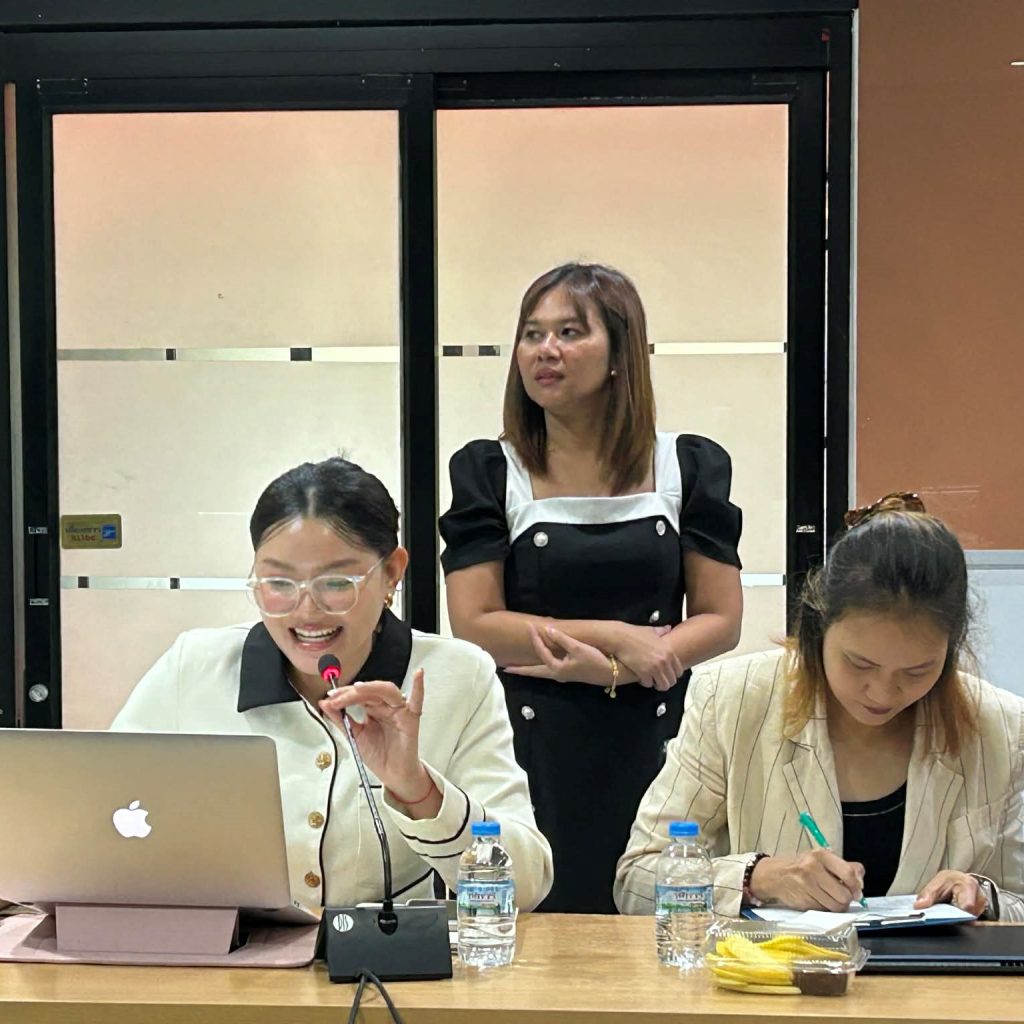
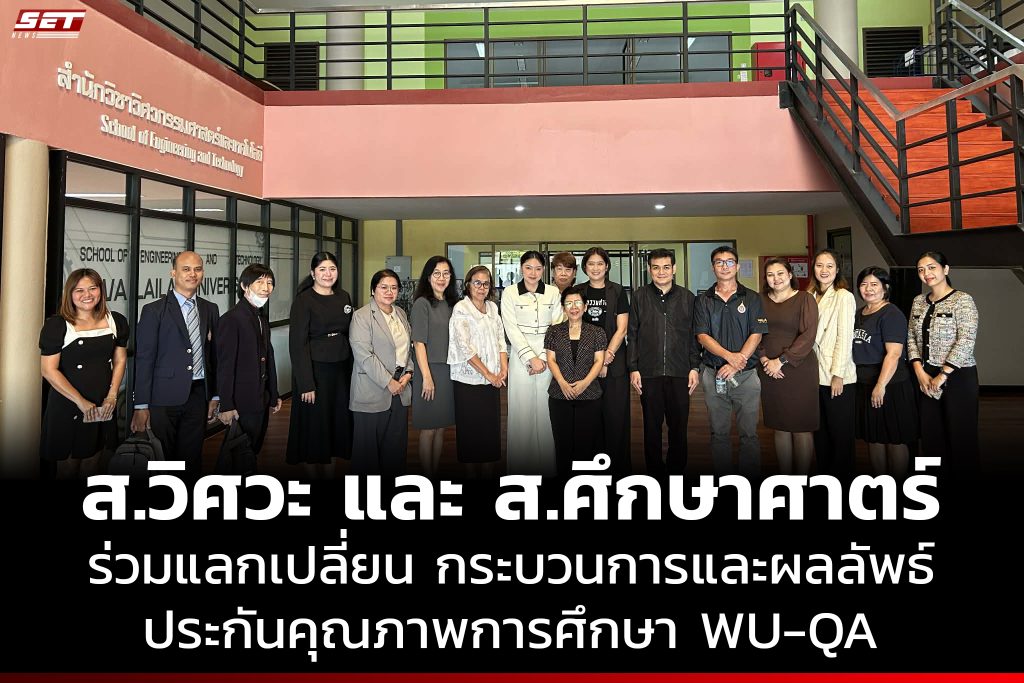
On 24 March 2026, the School of Engineering, Walailak University, welcomed administrators and staff from the School of Education, Walailak University, for a study visit and knowledge-sharing session on educational quality assurance. The visit aimed to exchange experiences, share best practices, and enhance understanding of internal quality assurance processes and organizational quality management.
The study visit focused on the implementation of the WU-QA (Walailak University Quality Assurance) framework, which serves as an important mechanism for advancing and improving the quality of education at Walailak University. The framework is aligned with the AUN-QA (ASEAN University Network – Quality Assurance) approach and covers operational processes, performance monitoring, assessment outcomes, and the use of evaluation results for continuous improvement. The ultimate goal is to ensure that educational management effectively responds to the needs and expectations of students, employers, graduates, and other key stakeholders.
During the visit, the two schools exchanged knowledge and experiences in six key areas, namely:
- Academic Affairs – AUN-QA Criterion 12
- Quality Assurance – AUN-QA Criterion 11
- Research – AUN-QA Criterion 13
- Academic Services – AUN-QA Criterion 14
- Finance – AUN-QA Criterion 15
- Student Support Services – AUN-QA Criterion 6
In addition to discussing systems and operational procedures, participants also exchanged views on data collection, performance indicators, monitoring processes, the use of data to support decision-making, and the development of support systems related to teaching and learning, research, academic services, and student support. These components are essential for strengthening the quality of academic programs and enhancing organizational performance in a systematic and sustainable manner.
The knowledge-sharing session was conducted in a constructive and collegial atmosphere. Administrators and staff from both schools shared experiences, challenges, solutions, and development approaches that could be adapted to suit the context of each unit. This exchange provided valuable opportunities for mutual learning and encouraged the adoption of effective practices across the university.
The study visit also represented an important form of internal knowledge networking within Walailak University, helping to promote collaboration and the exchange of expertise between academic units. Such cooperation supports the continuous development of academic programs, teaching and learning processes, student support systems, research, academic services, and organizational management in line with international quality assurance standards.
This activity reflects the strong cooperation among academic units within Walailak University and serves as another important step toward strengthening a sustainable Quality Culture across the institution. Through continued knowledge sharing and collaboration, the university aims to further enhance educational quality and advance toward academic and organizational excellence in a sustainable manner.