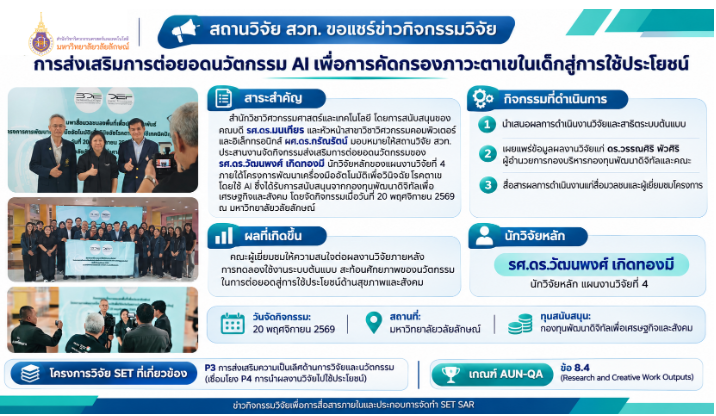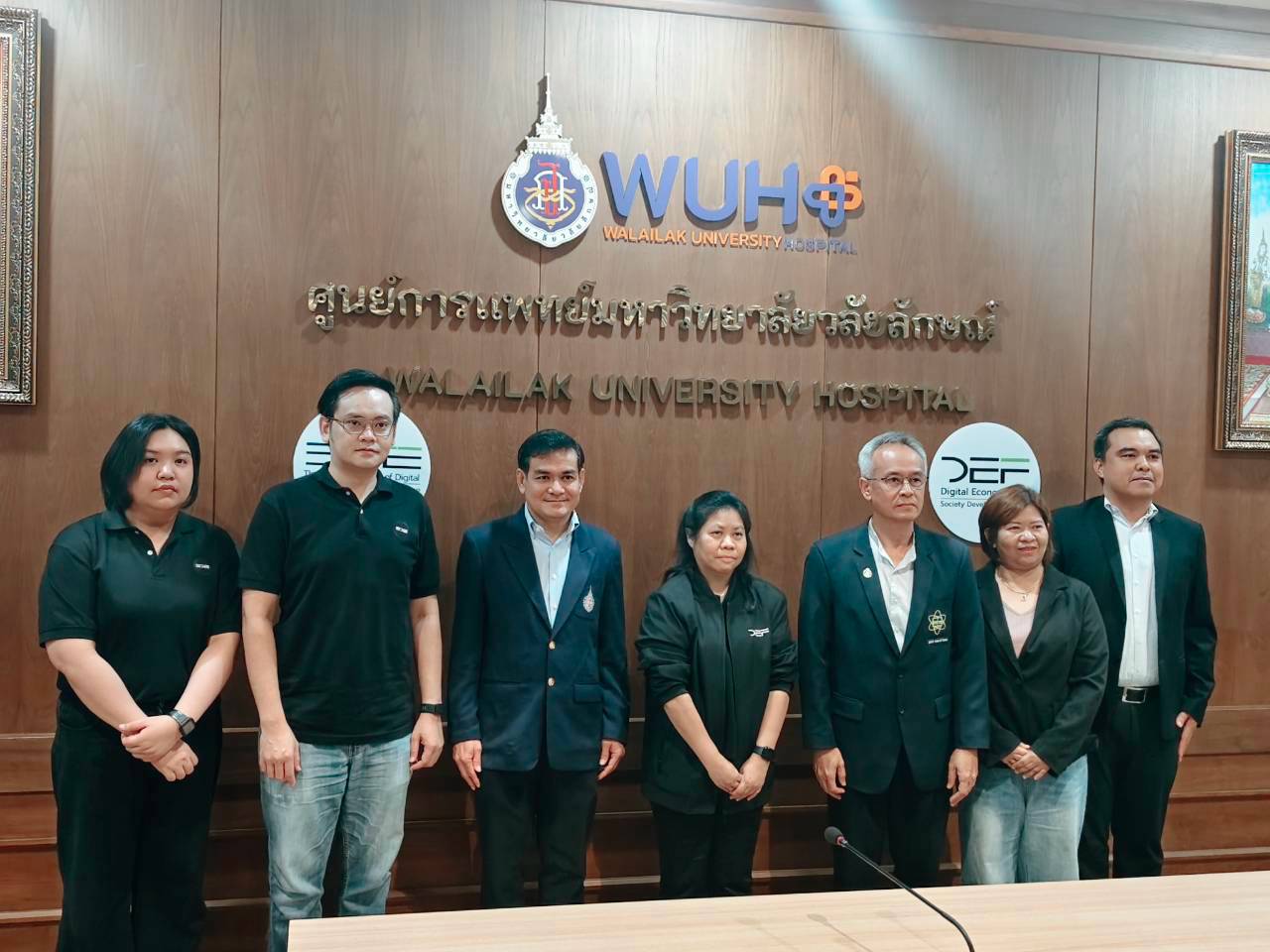
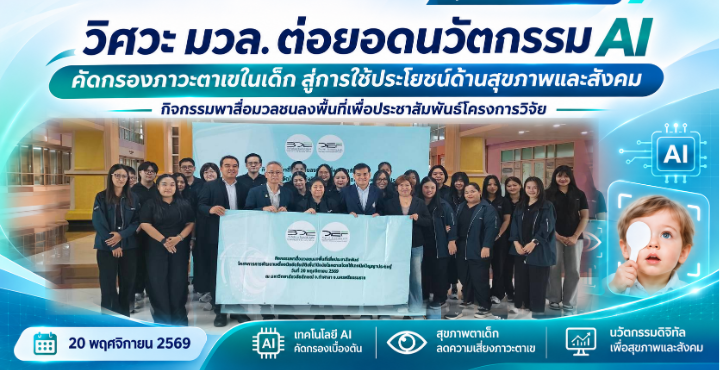
On 20 November 2026, the School of Engineering and Technology, Walailak University, promoted the dissemination of research findings and innovations in Artificial Intelligence (AI) through a media field visit organized as part of the Development of an Automated Tool for Strabismus Diagnosis Using Artificial Intelligence Techniques Project. The event was held at Walailak University, Tha Sala District, Nakhon Si Thammarat Province, Thailand, with the aim of presenting the progress of digital technology development for childhood strabismus screening and promoting the practical application of research innovations in healthcare and society.
The activity was supported by Associate Professor Dr. Monthian Sretkit, Dean of the School of Engineering and Technology, and Assistant Professor Dr. Karanrat Thammarak, Head of the Department of Computer and Electronics Engineering. Associate Professor Dr. Wattanapong Kerdthongmee, a faculty member of the Department of Computer and Electronics Engineering and principal researcher of Research Project 4, presented the research progress and demonstrated the prototype system to participants and members of the media.
The research project focuses on applying Artificial Intelligence technology to develop an automated tool that supports the screening of strabismus in children. By integrating knowledge from computer engineering and digital technology into healthcare applications, the project aims to improve opportunities for early screening and facilitate the identification of children who may be at risk of strabismus, enabling them to receive appropriate further assessment by medical professionals.
Research Progress and Screening Results
According to the project’s screening data collected in Satun Province as of 6 November 2026, a total of 3,177 children had been screened out of 3,938 targeted students, representing 81% of the target population. The screening activities covered 139 schools out of 159 schools, with approximately 170 teachers participating as system users.
The screening results also exceeded the contractual target of 1,200 children by approximately 2.6 times, demonstrating the project’s progress in expanding access to preliminary eye-health screening among schoolchildren.
Among the 3,177 children screened, 74 children, representing 2.3%, were identified as being at risk of strabismus, across 51 schools. The children were classified into three risk categories based on the screening results:
High-risk group: 43 children
Moderate-risk group: 27 children
Low-risk group: 4 children
Each group requires different follow-up procedures and additional assessments according to its level of risk. It is important to emphasize that these screening results indicate preliminary risk levels and do not constitute a confirmed medical diagnosis of strabismus.
Particular attention has been given to the 43 children in the high-risk group, with the project emphasizing coordination to facilitate further assessment by ophthalmologists. According to the project information, these children are between three and seven years old, an important developmental period during which early detection and timely medical intervention can play a significant role in supporting healthy visual development.
Promoting Research Innovation for Healthcare and Society
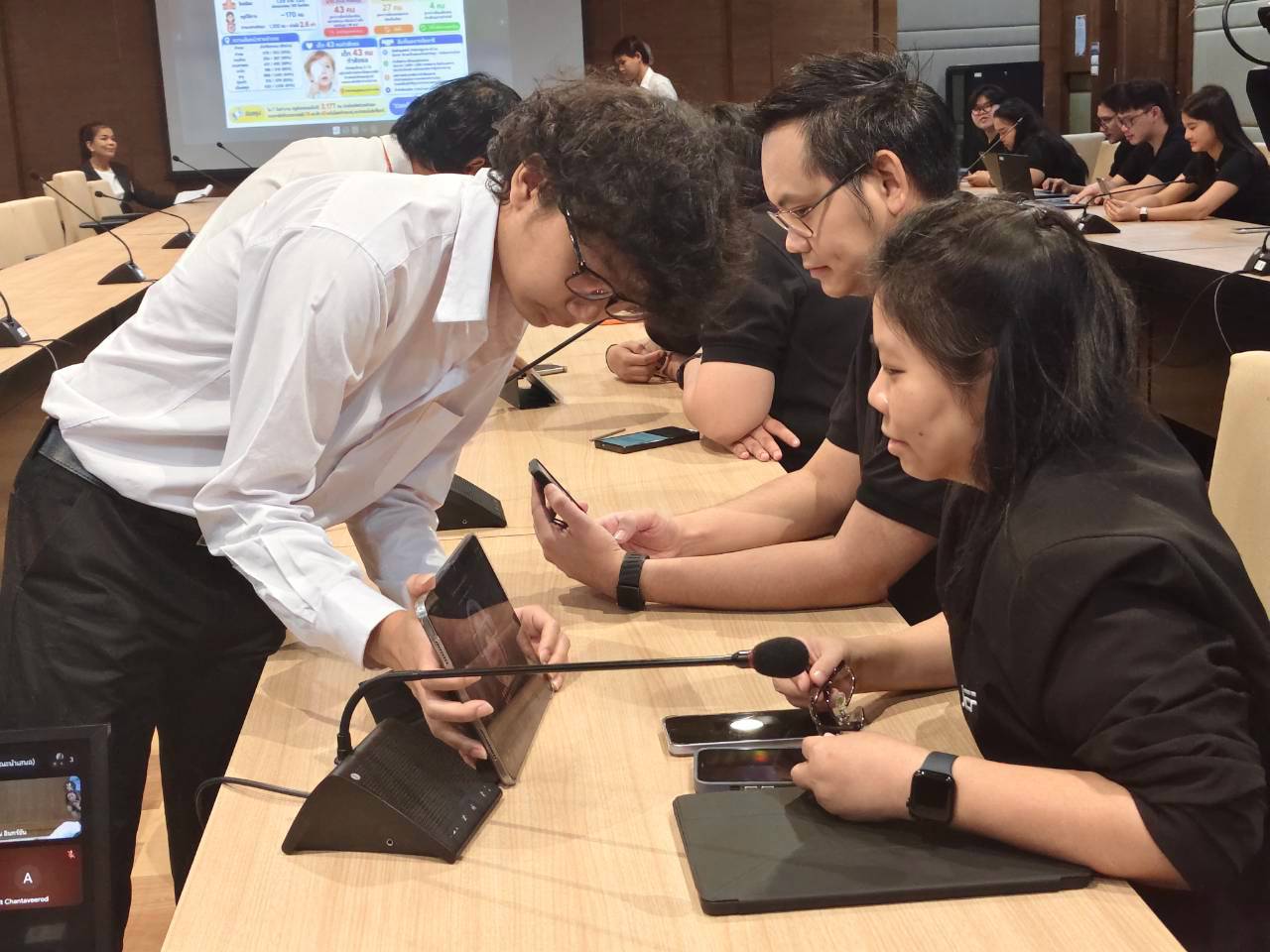
During the media field visit, the research team presented project achievements, demonstrated the prototype system, and shared information on the progress of AI-based screening technology. The activity provided an opportunity for participants and media representatives to better understand how Artificial Intelligence can support public healthcare services and contribute to addressing real-world health challenges.
The event also encouraged discussions on the potential improvement and further development of the system to better meet the needs of users and relevant stakeholders.
The project received financial support from the Digital Economy and Society Development Fund (DEF), which promotes research, development, and the application of digital technologies to enhance people’s quality of life and generate benefits for the economy and society.
This research initiative demonstrates how digital innovation can be integrated with practical healthcare solutions, particularly in improving preliminary screening opportunities for children in local communities.
Strengthening Research Excellence and Social Impact
The School of Engineering and Technology, Walailak University, places strong emphasis on promoting research and innovation that respond to the needs of communities and society. The School is committed to supporting the application of engineering knowledge, computer technology, and Artificial Intelligence to develop practical tools and systems that can create meaningful benefits for the public.
The progress of the Development of an Automated Tool for Strabismus Diagnosis Using Artificial Intelligence Techniques Project represents another significant example of transforming academic knowledge into socially beneficial innovation.
It also highlights the capabilities of Walailak University’s engineering researchers in developing technologies that address healthcare challenges while creating opportunities for further research applications.
Through continued research development and collaboration, the School of Engineering and Technology aims to advance technological innovation, contribute to improved healthcare accessibility, and support sustainable improvements in the quality of life of communities and society.